Following on from our recent review of the T100 Bonneville, here’s our take on its gangly sibling…
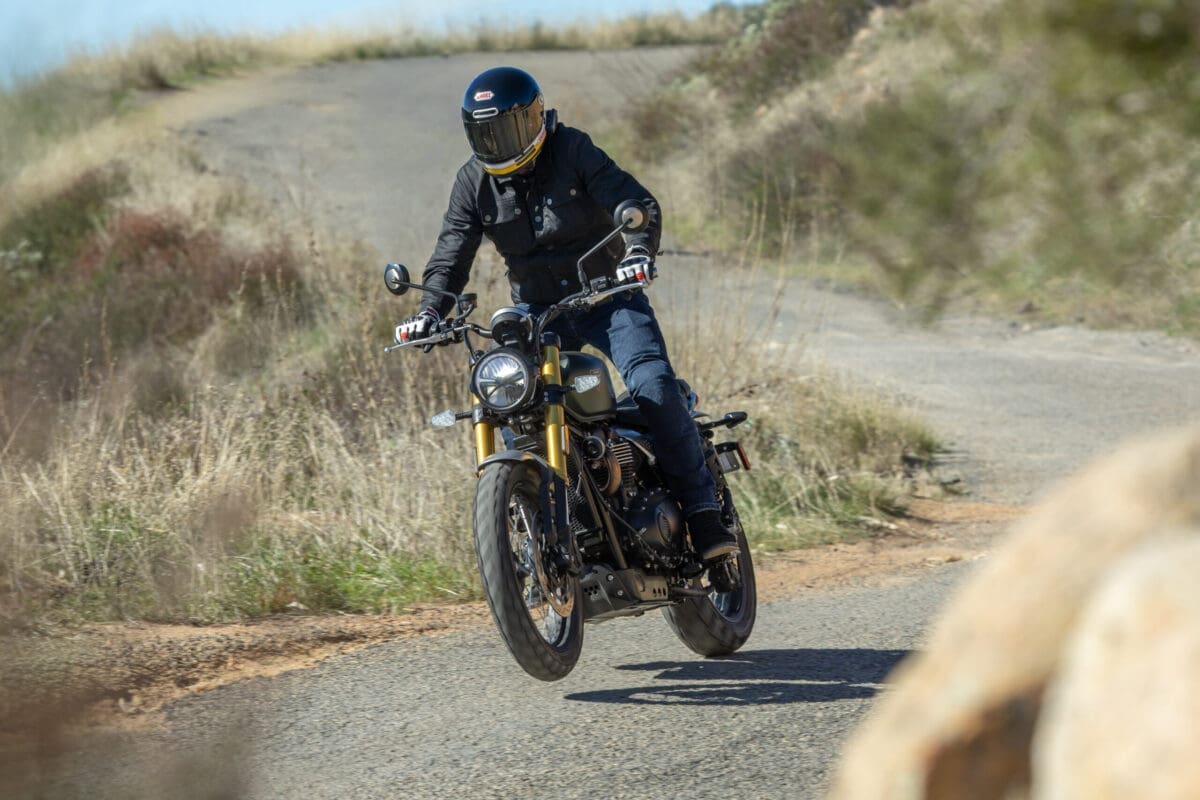
The odd one out in the Bonneville range is this gangly, dual-purpose Scrambler. Like the T100, it’s a model that’s proven pretty popular since it arrived on the scene back in 2006, and I’d bet its desirability is set to crank even higher thanks to the many upgrades this iteration has just gained, broadening both its appeal but also its potential to tackle the rough stuff should you find any trails on your travels. To recap, in case you missed last issue and the intro to the uprated Bonneville family, the Scrambler 900 now benefits from a reworked chassis, enhanced Showa suspension, a powerful radial brake and lightweight aluminium rims that improve agility and responsiveness.
And on the technical front, lean-sensitive Optimised Cornering ABS and Traction Control has been added to the mix, alongside an IMU. It is perhaps the most heavily refined of Triumph’s 2026 modern classics, and it looked a million dollars in the flesh. Like the T100, I’d never ridden one before but I’ve clocked plenty of miles on the Scrambler 1200. And while I’m a huge fan of the way it looks, I was somewhat relieved when the time came to hop aboard the 900 version and realised this one doesn’t require a stepladder to do so. At 790mm, the saddle’s not overly lofty, so my 5’ 10” frame found it so much more manageable and allowed for both my feet to touch firmly on the ground. I was also pleased to note the top-heavy feel was much lesser on this, though the design of the bike felt no less appealing.
Enjoy everything More Bikes by reading the MoreBikes monthly newspaper. Click here to subscribe, or Read FREE Online.
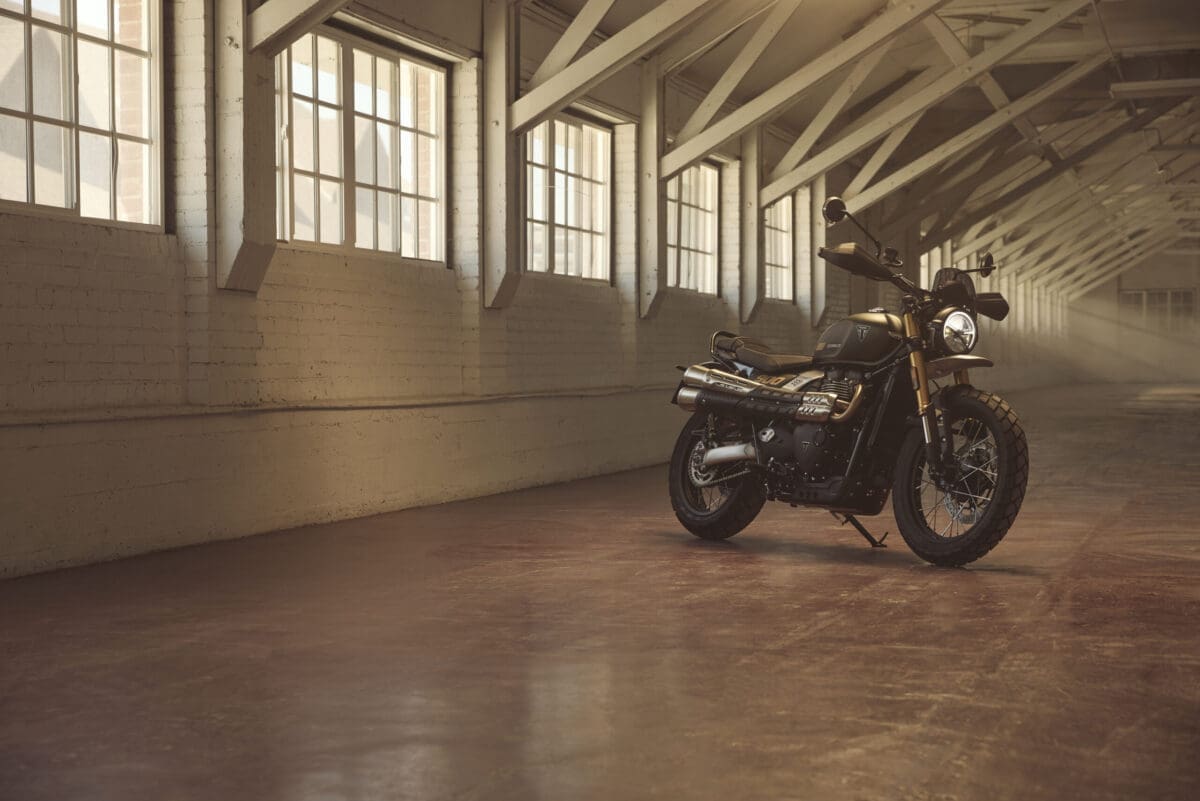
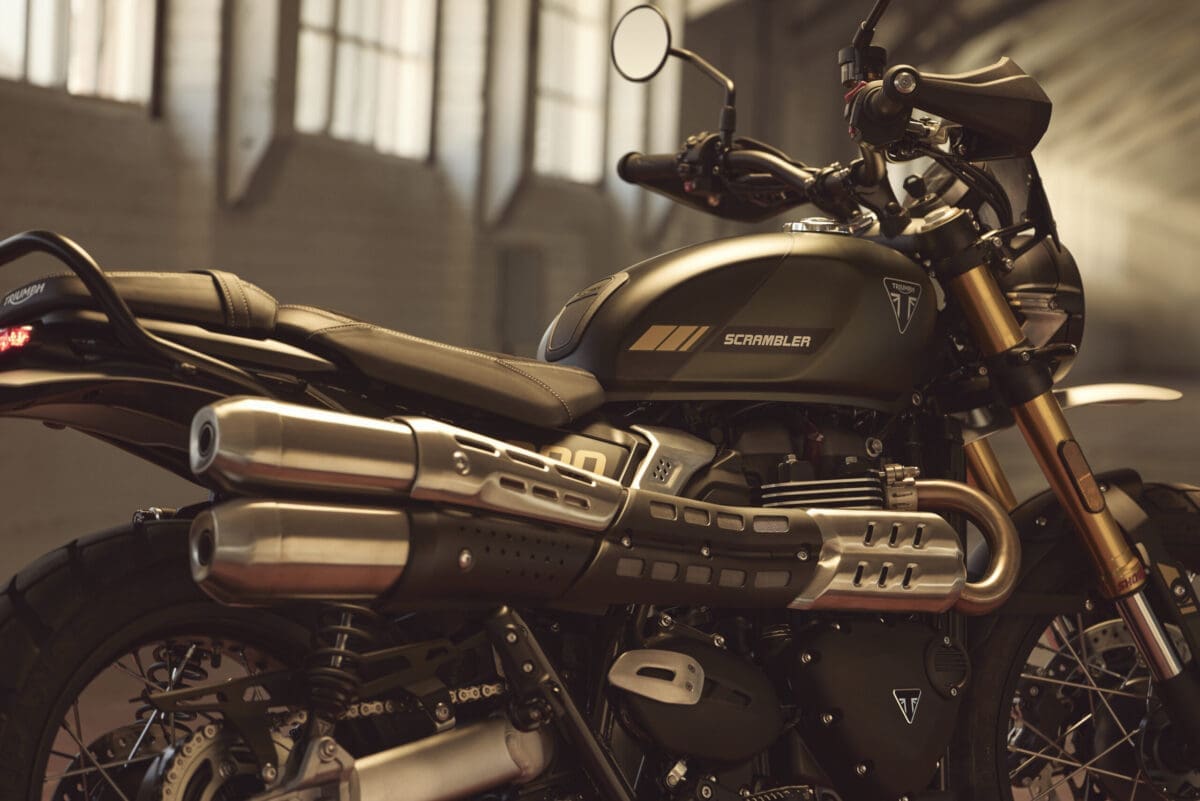
Without a doubt, the most impactful part of the Scrambler is its twin-stacked silencers that mount up high and look an absolute treat. And they sound every bit as good as they look. I’m not the kind of guy to take pleasure from needlessly revving bikes, but this thing had me doing just that, absorbing the audible delights that barked from the Triumph. The engine in it is largely the same as the one in the Bonneville, but its state of tune makes it slightly more potent. Another big difference is the fitment of a single dash that looks far more modern, with a TFT display sitting centrally that’s surrounded by loads of other features. In a game of spot the difference, you’d also be hard pushed to overlook the meatier, longer forks, or the uprated four-pot caliper up front. The swingarm is also lengthier and more typical of a unit you’d find on an off-road bike, just like the model’s spoked wheels that are a good chunk lighter than those that came fitted to the last iteration. Throw in a sump guard, a stacked bench seat and higher sweeping bars, and you’re left feeling convinced the bike’s been built with real dual-sport capabilities.
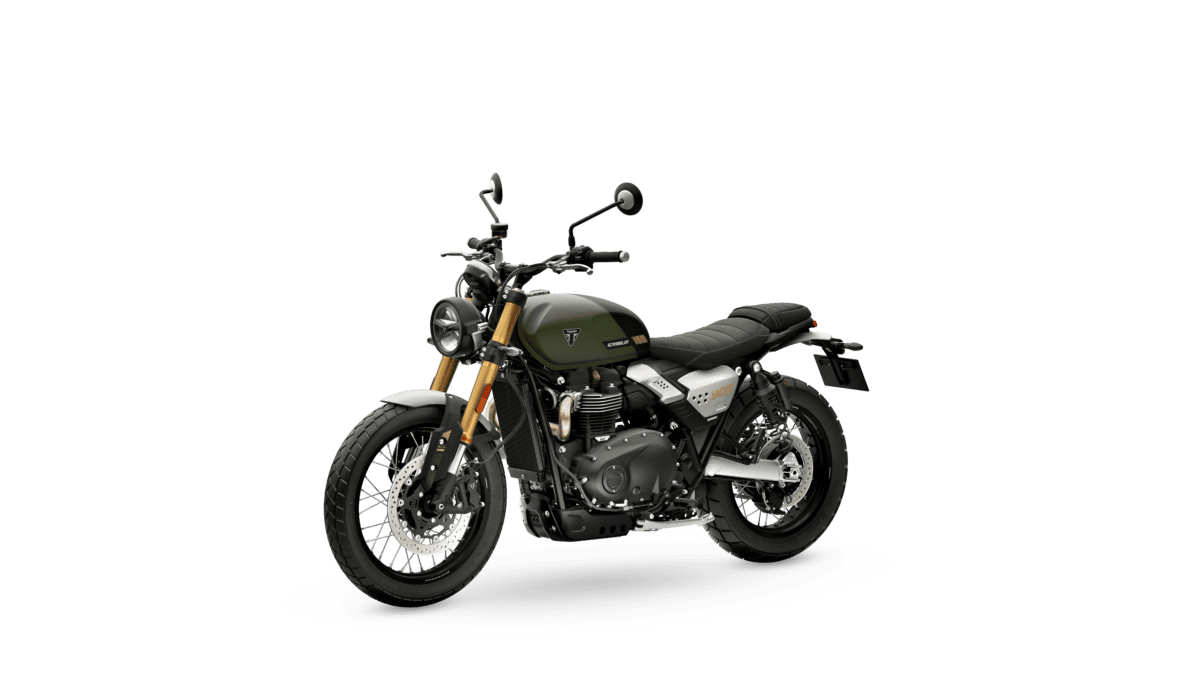
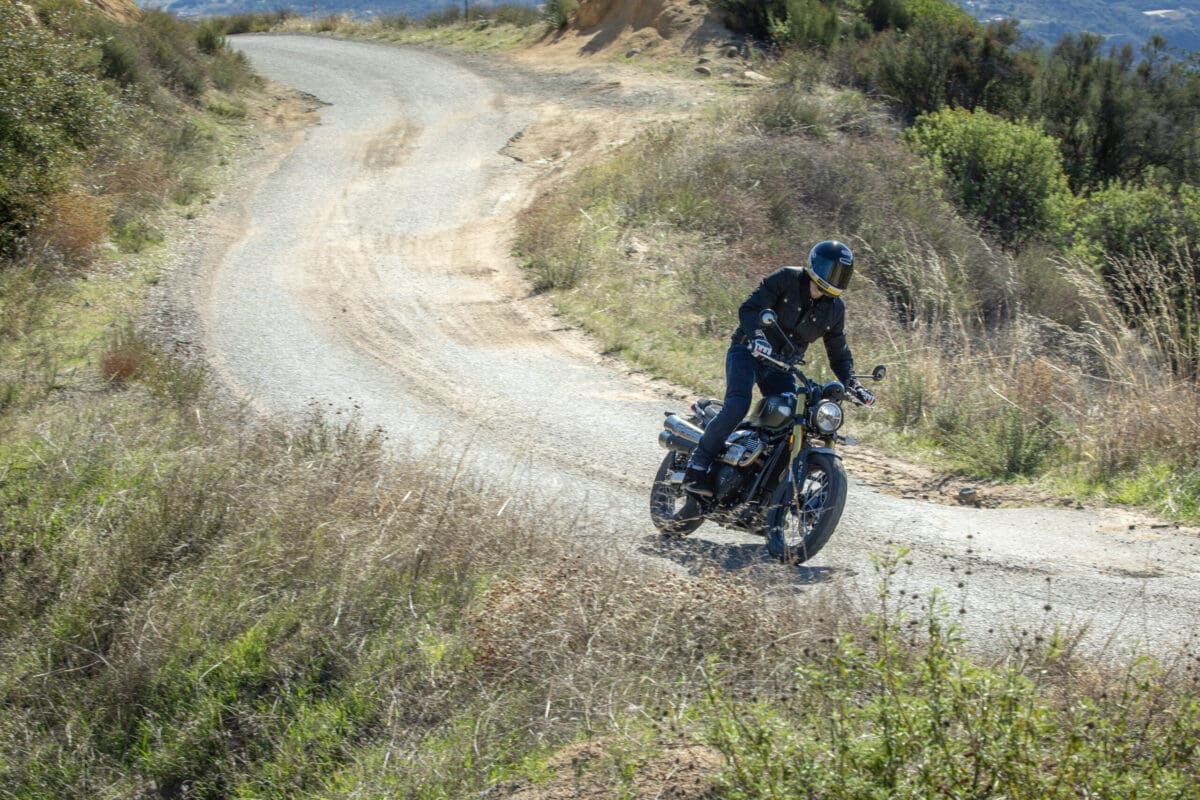
Unfortunately, we never got the chance to give this thing a proper spin off-road, but a few dusty, pot-holed routes did their best to throw a few challenges at the Scrambler I was riding. There were some sketchy conditions on the cards, and the Triumph did a good job of tackling the lumps, bumps and loose gravel that made up this improvised assault course. I quite often had the front wheel in the air and the rear shocks running at the bottom of their stoke, giving me a reasonable appreciation of what the Showa units had to offer. They were far from shabby, and whilst they couldn’t magic away the impact of the mass smashing ground-wards on occasion, they convinced me that Triumph would be decent on light trails.
For the majority of such antics, I had the traction control on but found the bike much more pleasurable with the system turned off, and the same with the rear ABS disengaged. The tech on the bike was very limited and I found the constant flash of the TC on the dash more distracting than it was helpful at times. With it off, I got a fuller feel of the twin and the playful nature of the Scrambler. Being frank, there’s not a tremendous amount of poke on tap, yet still enough energy to have a good time, backed up by a cracking soundtrack and a commendably smooth spread of power. It’s in my nature to always want to ride faster, but the best miles I clocked on this bike were the steadier ones, embracing character of the Triumph. It genuinely made me feel like I was riding something special, and it was all the more endearing thanks to its towering riding position that was also super comfy.
One thing that could be a little uncomfortable was the heat from the exhaust system. It goes without saying that the routing is playing with fire a little, and despite a guard to keep you from resting your leg directly onto the pipework, the heat was never shy of making its presence known. To be fair, when riding at a reasonable pace, it wasn’t such an issue, but in town, stuck in traffic, it could get a little toasty at times. Still, it wasn’t enough to put me off the bike, and especially after having spent a good few hours on the thing. The more I rode it, the more I liked it, learning firsthand that it was more than just a pretty face.
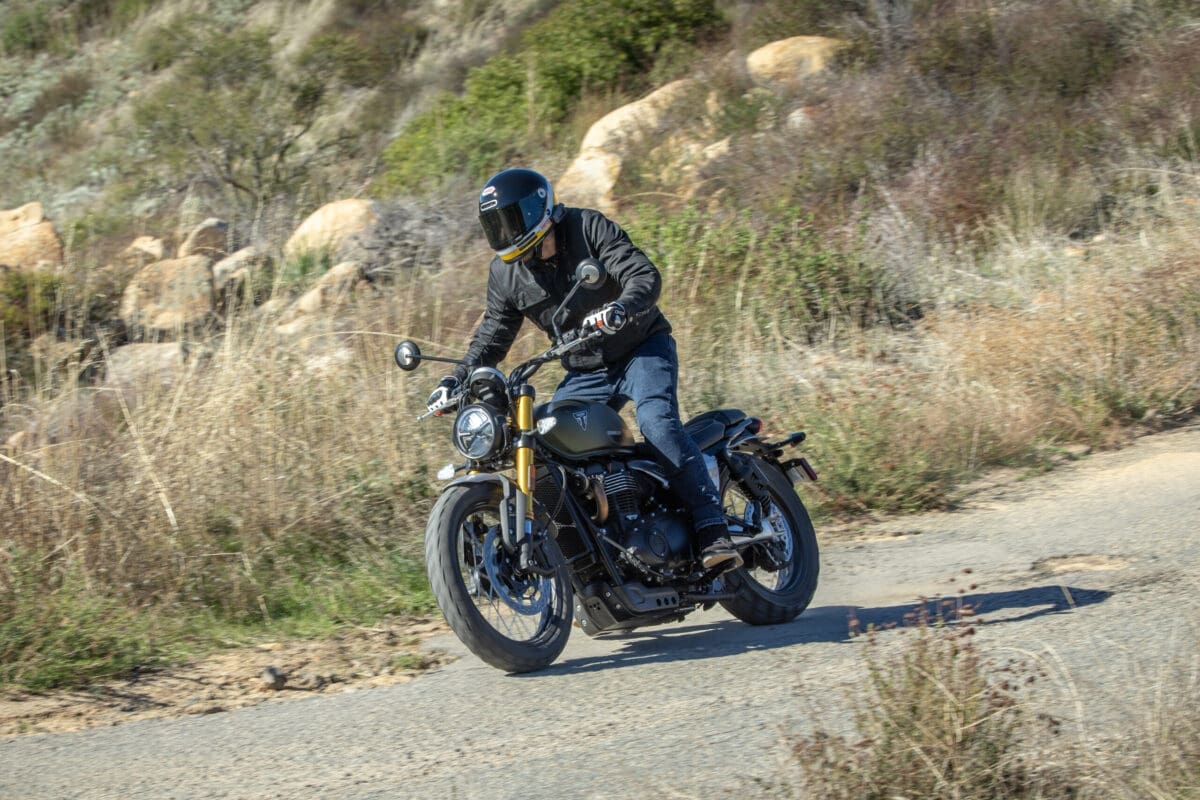
The last stint of our ride saw us tackling some tight and twisty, narrow roads that were constantly undulating. That’s where this thing was most at home, carving its way with ease and planting a big smile on my face. It’s hard to describe what it is that makes this bike standout special, other than the feeling it gives you. It feels genuinely purposeful, versatile and up for whatever you throw at it. It’s also strikingly easy on the eye, masterfully blurring the best of the retro vibes and pairing them with contemporary tech and qualities. Without a doubt, this was my favourite model of the launch… and the one I’d be taking home if my bank balance had nothing to say about it.
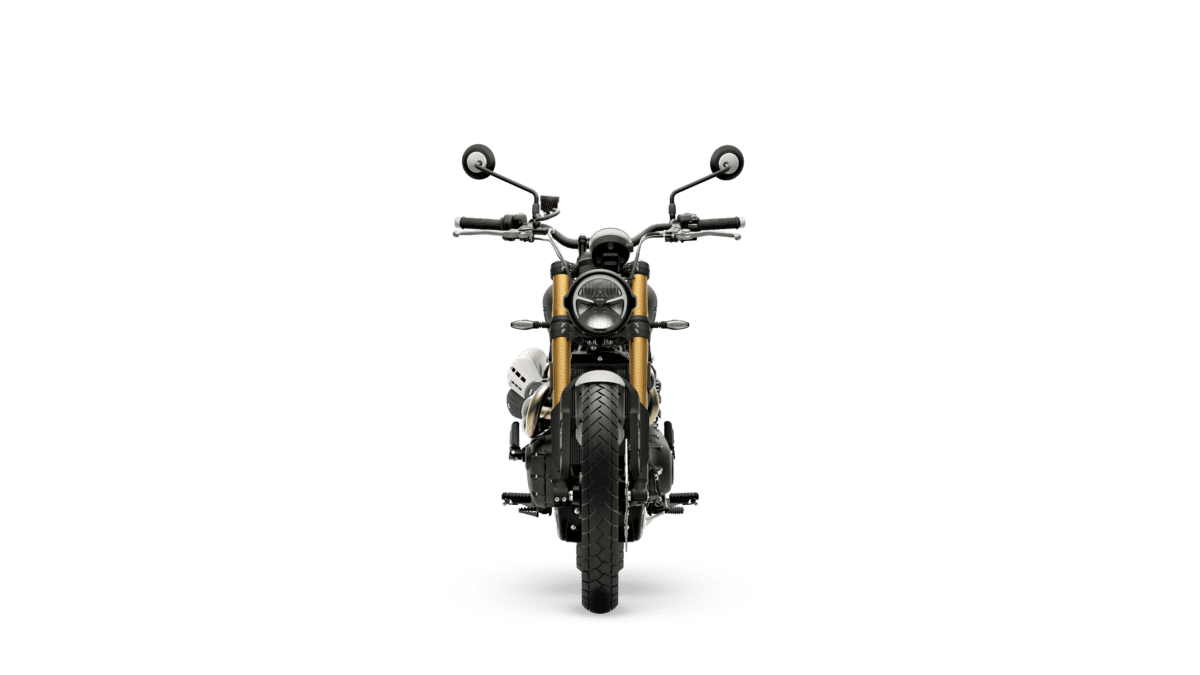
Specs: Triumph Scrambler 900
Engine: 900cc, Liquid-cooled, parallel twin
Power: 64bhp @ 7,000rpm
Torque: 80Nm @ 3,750rpm
Frame: Tubular steel cradle type
Rider aids: Cornering ABS, 2 rider modes, Traction control, Cruise control (optional)
Front: Single radial, four-pot caliper and a 320mm disc – OCABS
Rear: Single caliper, 255 mm disc – OCABS
Suspension:
Front: Showa 43mm upside-down forks with 120mm of travel
Rear: Dual RSU shocks with adjustable preload and 120mm travel
Seat height: 790mm
Fuel capacity: 12 litres
Wheelbase: 1445mm
Weight: 221kg (kerb)
Price: £10,395
Contact: www.triumphmotorcycles.co.uk