
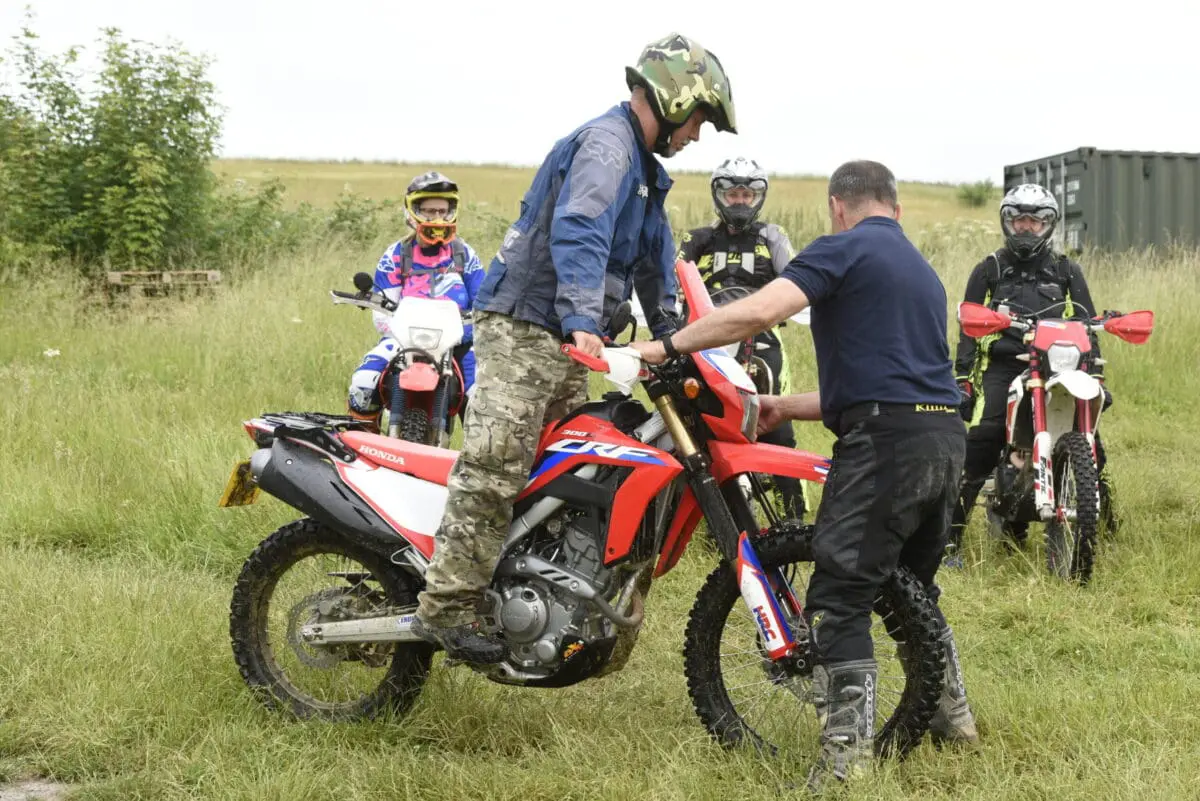
We’re wading into the debate about whether to sit or stand when riding on trails.
Anyone new to trail riding will notice a curious split on how people tackle our green roads: some riders cruise along planted firmly in the saddle, while others stand tall on the pegs like they’re prepping for a Dakar special stage. So, which is right? When should you stand, and when is it better to stay seated?
To get a straight answer to this, we caught up with John Bilborough, trail-riding instructor with Phoenix Motorcycle Training, and a man who lives and breathes off-road technique. He has spent enough hours on mud, chalk, sand and rubble to know a thing or two about how to position yourself on a bike.
Enjoy everything More Bikes by reading the MoreBikes monthly newspaper. Click here to subscribe, or Read FREE Online.
“Whether you sit or stand really depends on the terrain, your fatigue level, and the traction you’ve got under you,” John says. “There are good arguments for both.”
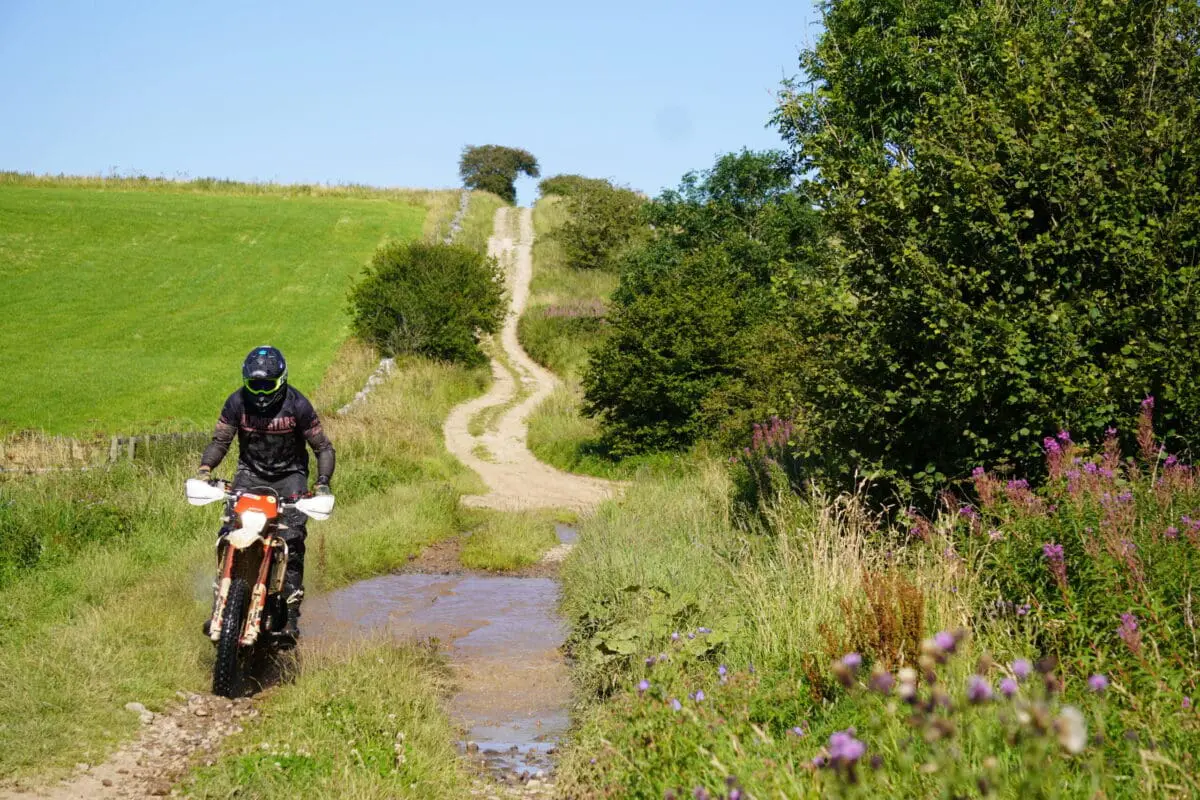
Sitting: Front-end feel and dynamic positioning
When approaching flat or off-camber corners, John often chooses to sit, but not in a relaxed, feet-up sort of way.
“I’ll slide forwards on the seat to get my weight over the front wheel to give it more traction,” he says. “Being closer to the bars also brings my elbows up, which gives me better control.”
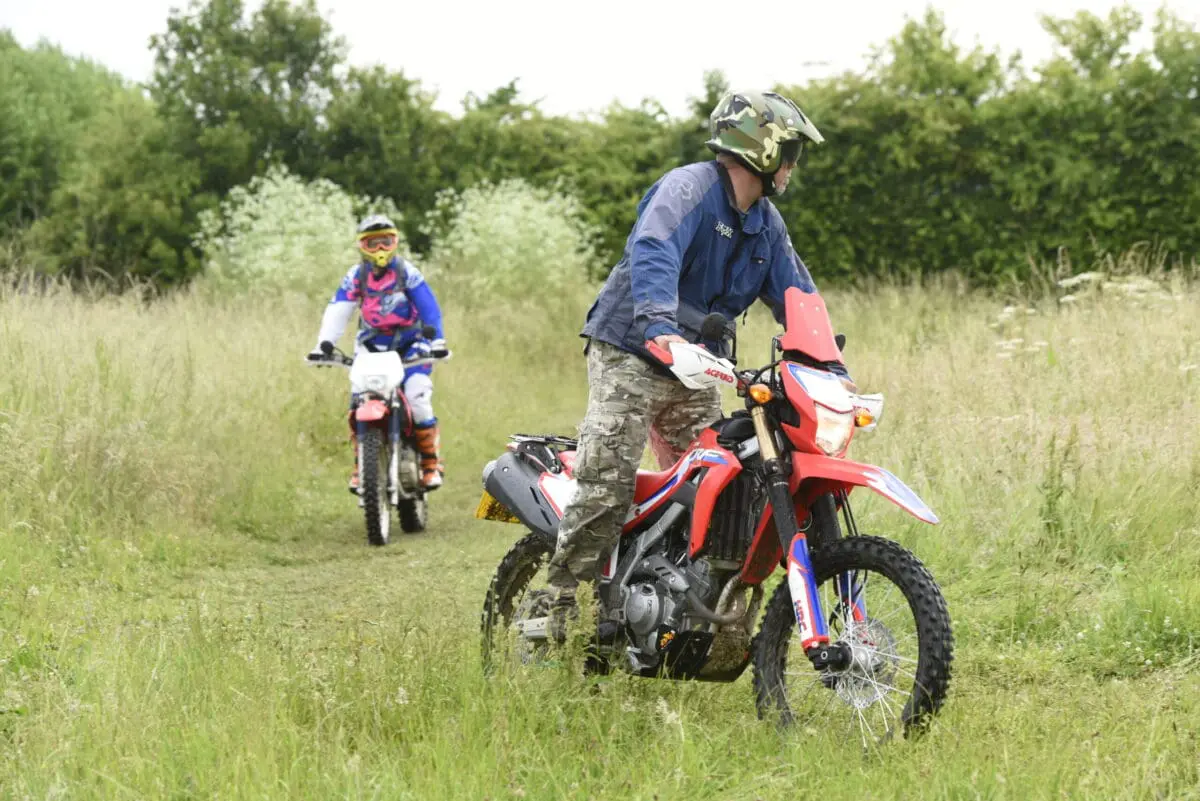
Rather than sitting stiffly in the seat, in corners John leans the bike into the corner but shifts his body to the outside edge of the seat, sometimes with only one bum cheek actually planted on the seat.
“I’m pushing the bike into the corner with my hands and with pressure from my outside knee against the tank,” he adds. “That helps steer the bike through.”
Footwork matters, too. His toes stay on the pegs, body loaded forward, searching for feel through the front tyre.
“Lower tyre pressures on the trails give a really nice footprint, which helps grip on loose surfaces,” says John.
In short, sitting isn’t about relaxing — it’s a deliberate, dynamic position used to load the front end and maximise steering feel.
Standing: Control and balance
When the terrain opens up or the camber starts helping rather than hindering, John is just as likely to rise onto the pegs as stay seated.
“When I’m standing, I’m still keeping my weight forward to give the front tyre plenty of traction. My chin line is over the centre of the bars, almost on top of the headlight,” he explains.
Standing allows the rider to counterbalance more aggressively, pushing the bike beneath them while their body stays upright.
“I counterbalance by moving my weight to the outside of the turn, pushing the bike into the inside of the corner,” says John. “If it’s super smooth, I’m pushing the bike into the corner with the outside leg.”
Foot position changes with terrain. Normally, it’s the balls of the feet on the pegs, heels driven down, but if it’s really rocky or really loose – like Easter egg to rugby-ball-sized rocks – John brings his feet out a bit to let the bike move around more.
When standing, legs stay mostly straight, with a soft bend at the knees and hips.
“You want a bit of flex so you can become part of the suspension,” John explains. “Fatigue plays a part — sometimes you straighten up to stretch, but when you hit bumps or bomb holes, you need to compress and absorb it with your legs.”
Weight shifts constantly depending on terrain and gradient.
“If I’m accelerating, I move forward so I’m not thrown backwards. On descents I keep my weight central so the front wheel tracks. I don’t want to go through the front door,” he laughs.
On steep climbs, the technique changes again:
“If it gets really steep, I might sit back on the rear of the seat and let the bike climb and track its way up.”
The real skill: Reading the trail
According to John, body position is only half the story. The really smart move is to read the terrain before it becomes a problem.
“It’s all about looking up the trail and seeing where you’re going to get traction and where it might be slippy,” he says. “Recognising the best tracks to aim at and keeping a slow but steady pace gets you through most things. Momentum is your friend — right up to the point where it isn’t.”
Riders should also listen to their own bodies, and be realistic about their energy levels.
“If your hands are getting sore or your forearms are aching, you’re probably not supporting your weight well enough,” John warns. “If you feel like you are struggling, just take a break and then try again. And when it all gets too much, just call it a day, and return another day.”
The golden rules: Smooth beats fast
Whether you ride seated or standing, John says the fundamentals never change. The things to remember are to keep your weight over the front wheel, and be super smooth on the throttle. No snappy inputs, no mid-corner hesitation.
“I keep a constant drive. I’m not on and off the throttle, waiting for the apex. It’s slow in, smooth through, and quick out.”
Gear choice matters too: “A gear higher than most people would use is usually better,” says John. “You don’t need lots of revs — you need smooth power.”
Final verdict: Sit or stand?
So… Sit or stand? The truth is, there is no single ‘correct’ technique. Sit when you feel like that works better, and stand when you feel like you achieve better control that way. And above all — stay smooth, stay loose, and keep looking up the trail.
“There’s never just one right or wrong way,” John concludes. “It depends on the terrain, surface, incline, descent, and how you’re feeling in that moment.” And if it all goes wrong and you get stuck in a rut or on rocks, put your feet down and paddle. Whatever works and gets you past the obstacle is fine. The main thing is to have a good time on trails, so you decide what gives you the most enjoyment.
If you decide to have a go at trail riding, let us know how you’re getting on, and whether you are sitting or standing!

Phoenix Trails
Phoenix Trails is the trail riding arm of Phoenix Motorcycle Training, the UK’s largest and highest rated training provider, offering trail riding training.
If you want to try trail riding or improve your skills further, Phoenix Trails offers friendly and professional training tailored for anyone from complete beginners to seasoned pros in several locations around the country.
Call: 0330 2234000
Email: [email protected]
Web: http://phoenixtrails.co.uk